How would You Describe Your Cycle?
Our choices in language hold a lot of meaning.
7/24/20262 min read
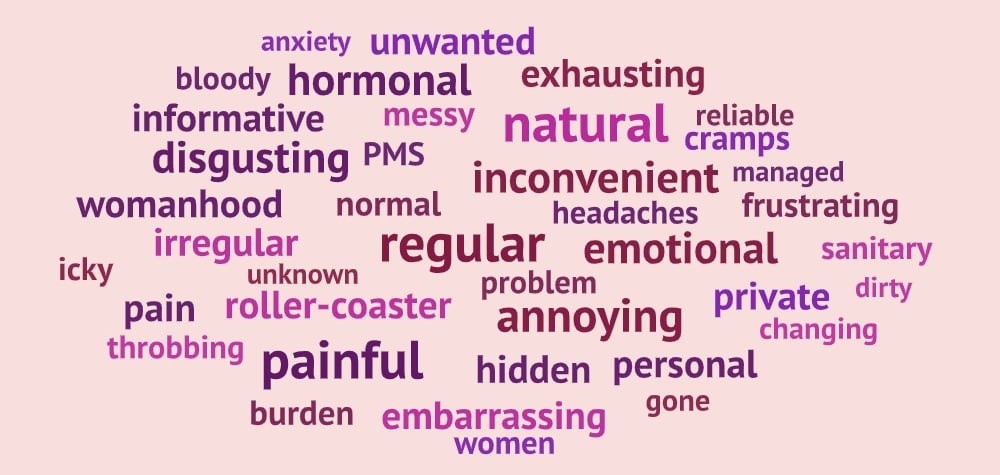
Were any of the ones that you thought of in the list above?
The words we use to describe this process in our bodies say a lot about our relationship with it. The language may be learnt from others; our families, communities and society. Or it may be influenced by our experiences of our cycle. What do your words suggest about your relationship with it?
If pain or overwhelm is a regular part of your cycle, you may have a difficult relationship and feel resentful of your cycle. This may also be the case if you are trying to get pregnant and each period brings the pain and loss of being unsuccessful.
Or maybe your period is the only thing you really notice about your cycle and the words you use are based on uncomfortable experiences of them. Maybe they feel messy or inconvenient. An ill-timed period on your holiday or the embarrassment of leaking through to your clothes.
Even the use of labels for the products used for managing a period can imply that they are dirty and need to be hidden. Sanitary or feminine hygiene products suggest that the blood that comes from our bodies, like any other blood that would come from a wound, are unclean. This adds to the stigma around periods and the shame felt in talking about or even having them. How about we use the names period products or menstrual care products.
A lot of the time talking about our cycles is shunned, with it being suggested that it is private and would make others uncomfortable. It can mean that we must whisper to others to ask for period products or use euphemism to share that the ‘Crimson Wave’ has come. This adds to the shame of menstruating and can create a detachment from our bodies and our cycles. If we don’t feel safe or comfortable in talking about it, then it’s something we feel we should ignore or dismiss as much as possible.
This disconnection leaves us at a disadvantage though. We can feel alone and confused by our experiences of our cycle, especially when something changes or becomes painful. We have to keep it hidden and in hiding it, we ignore what it might be telling us. We don’t get the opportunity to understand our bodies fully and how to live well within them.
This also impacts our ability to take care of our body. Not knowing that your vulva and your vagina are different things can mean that more guesswork is made around your medical care. How can you accurately describe what is wrong if you don’t have the words for it?
With women’s health still being an under researched area, diagnoses and support can take a long time to get right. Informed advocation for our bodies is essential in getting the care that we need. Language is powerful here too! Having the courage to talk openly and accurately about our bodies and our periods can be life changing.
Our choice in language is exactly that. A choice. The words you use to describe your cycle reflect and impact your relationship with it. What if the words around the period and the cycle were kinder, respectful and held with reverie? Natural, sacred, spiritual, powerful, informative, earthly, strong, human. What impact could those have on your relationship?
Maybe you can pick one, or another that you like that I haven’t given, and see if you notice a shift in how you see and relate to your menstrual cycle. A simple thing, that could have a big impact. I’m choosing powerful.
By Caroline Hutchins, 24th July 2026